Chocolate Judging in the Pandemic Era

The Covid-19 pandemic in the last 18 months has affected everyone in different ways, and we all have to find ways to adapt to how we work and live our lives. When the pandemic started to spread around the world in February 2020, it was right in the middle of the Academy of Chocolate competition. Usually the judging is held in-person at a catering college in London from February to May, and we managed to finish judging the bonbons in February without any disruption. However, the bean-to-bar chocolate judging was supposed to start around late March 2020, and with the UK going into lockdown for a few months at that time, the judging didn’t restart until October 2020 and it was all remote judging. Only the more experienced judges were invited to this remote judging.
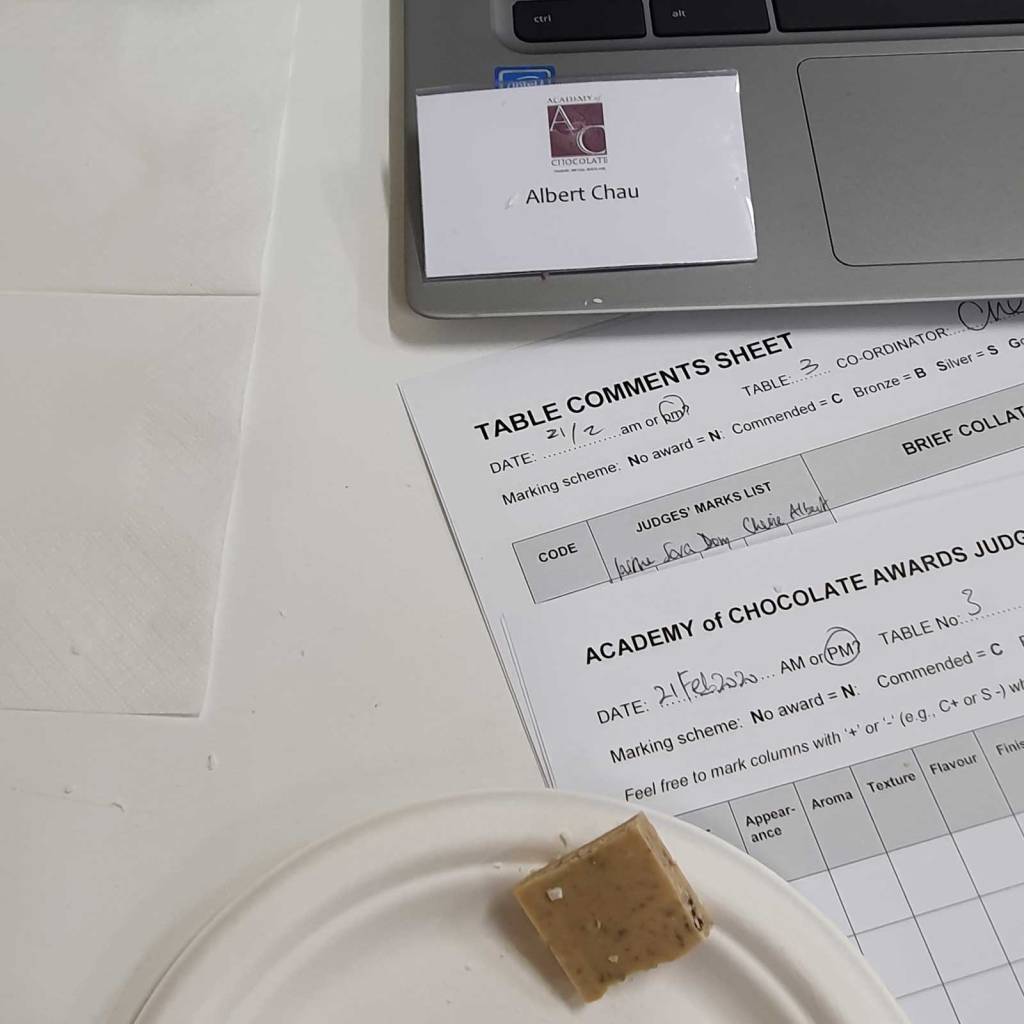
One of the last in-person judging at Academy of Chocolate in February 2020 before the Covid restrictions came into force

With the virus continuing to wreck havoc around the world, this year the bonbons competition has been postponed until the autumn, but the judging for the bean-to-bar competition is currently ongoing. As the pandemic is far from over, the judging is once again done remotely by the more experienced judges, and having learnt from last year’s judging, this is how the judging is conducted currently:

  • The judges are divided into groups of 3. Each group would be sent approximately 50 bars in each round – round 1 was completed in June and currently we are in the middle of round 2. Each group would have a lead judge who will coordinate how the judging will be performed in the group and obtain consensus on the group score/award for each product. With the social distancing and travel restrictions, most people have made use of Zoom or Google Meet. Some groups do the judging “together” in several calls, while others have chosen to judge individually first and then meet virtually to discuss any discrepancies/disagreements on the scores.
  • Each judge would be sent a whole bar for each product – this is for health & safety reasons, to reduce contact with the judging products by the Academy of Chocolate coordinating staff to a minimum. Usually with in-person judging, the staff would break the bars into pieces onto plates on the day, and the judges would be blinded to the products. However, with remote judging, this is tricky, as opening and breaking the bars, and packing the pieces into individual bags, may mean that by the time the bars arrive at the judges, the products have already been out of their original packaging for a while.
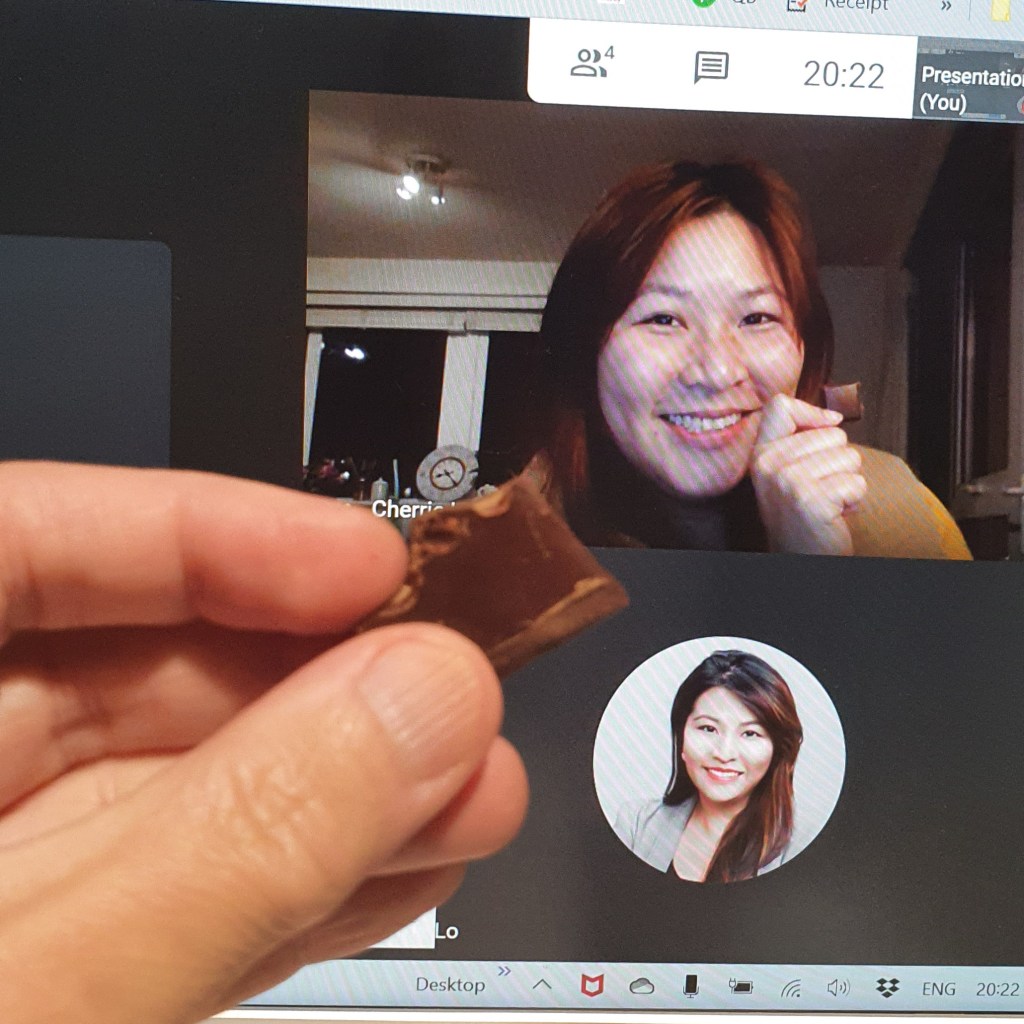
Remote judging via Google Meet with fellow judge Cherrie Lo in November 2020

There are pros and cons of remote judging compared to in-person judging. Here are some of the disadvantages:

  • You don’t meet fellow judges in person and sit around tables to judge each product under the same condition, as well as mentoring the more junior/less experienced judges (usually each judging table would have a mixture of judging experience).
  • Knowledge exchange plays a key part of the judging – with inclusion bars, sometimes there may be an ingredient which is not familiar to most judges, and with in-person judging, often there’s at least one judge in the room who will know about the ingredient and it is useful to have some guidance on what to look for. However, with remote judging, this is more difficult, though a bit of internet search can often help.
  • Judges are not blinded to the products. However, the judges are experienced enough not to be influenced by the knowledge of the makers/producers. I usually break up about 9-12 bars and judge them in batches – this provides some partial blinding as I can rarely remember the products by the time I have broken this number of bars in one go, before proceeding to judging the products.
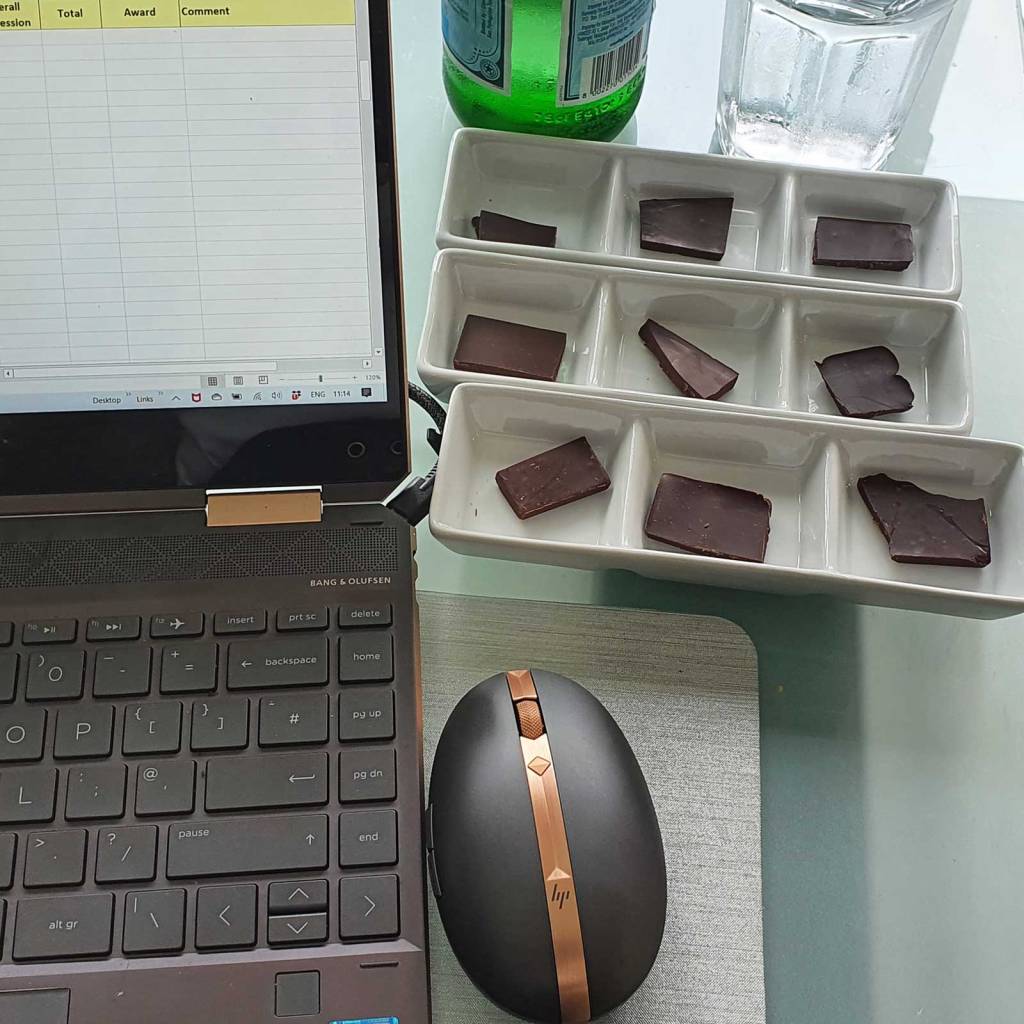
A technique to improve blinding to the chocolates during remote judging

  • Occasionally you will find that the product is damaged and you only find out when you open the wrapper. This has happened to a few bars that were bloomed and damaged by heat – probably when they were sent from the other side of the world to London, and with the pandemic, sometimes even the air freight has become rather unreliable and may take several weeks to arrive. Usually when the bars are badly damaged, we would inform Academy of Chocolate staff who will then contact the entrants to have the products resent. With in-person judging, we didn’t see this problem often as the products would not have reached the judging tables, but also the shipping would have been more reliable.

However, there are several advantages with the remote judging that I quite like:

  • With my group, we usually judge separately and we would then just get together once we have judged a substantial number of bars. This means that we are not influenced by the others in the initial judging. With in-person judging, sometimes the quicker judges may start commenting about the product whilst you are still trying to make up your own mind about the product. In my experience, most of the times the judges in my group all have very similar scores when we judge separately – there are a handful of “controversial” products which will require some discussions and retasting during the video calls.

An average amount of chocolate samples judged in one session before giving the palate a break

  • I can decide when I judge the products and how many products I judge in one go with remote judging. With in-person judging, we are usually judging approximately 25-30 products in a 2-hour/3-hour session – Sometimes I do suffer from palate fatigue by the time I get beyond 20 products (especially if the session consists entirely of plain chocolate bars). With remote judging, I can take a break or stop whenever I feel the need to, and judge at a later time when my palate has recovered. If there are products which I am not totally sure about the scores (e.g. when I feel that my palate is not quite as sensitive on the day), I can always come back to them on another day. Also for any products that are worthy of an award in the initial tasting, I would usually repeat the tasting after I finish judging everything, to be sure that I am judging all the products consistently.
  • With remote judging, some of the experienced judges who live far away from London can be more involved with the judging. Before, sometimes they would travel into London for the day, which is a big commitment, and also not ideal when the train is delayed and they would have to rush to the venue.

Will this kind of roundtable in-person judging return soon?

Is remote judging here to stay? This remains to be seen. For the AoC bonbons competition, the current plan is to have in-person judging in London later on this year, as repacking the bonbons and distributing them to the judges poses some additional challenges. Personally I can see the advantages of moving to a mixture of in-person and remote judging, and with the pandemic coming in waves with the new variants, this might not be a bad idea to remain flexible in order to keep the disruptions to competitions to a minimum, and to celebrate the work of the chocolate makers and chocolatiers from around the world.

Growing Cacao in London – Our First Year Story

A year ago, we were given a fresh cacao pod. Originally we were going to open it and taste the fresh pulp inside, but when it’s opened, we could see some of the beans inside had started sprouting. We thought we’d plant them instead. This little fun project turned out to be a rather interesting learning journey for us.https://www.youtube.com/embed/t9Nd05iNSTA

In total, we planted 14 beans into pots, with the hope that one (out of fourteen) might grow. “You pessimists!” we hear you say. With London being closer to the North Pole than Equator, and without a heated greenhouse to mimick the tropical climate (like at Kew Garden), the odds of growing cacao successfully is stacking high against us.

Theobroma Cacao in the heated greenhouse at Kew Gardens

The June weather in Britain fluctuates quite a lot, and so we decided that we would put seven pots in the shower cubicle in the house as it’s warm, while the other seven would go in the greenhouse (partly because the shower room was simply not big enough). 

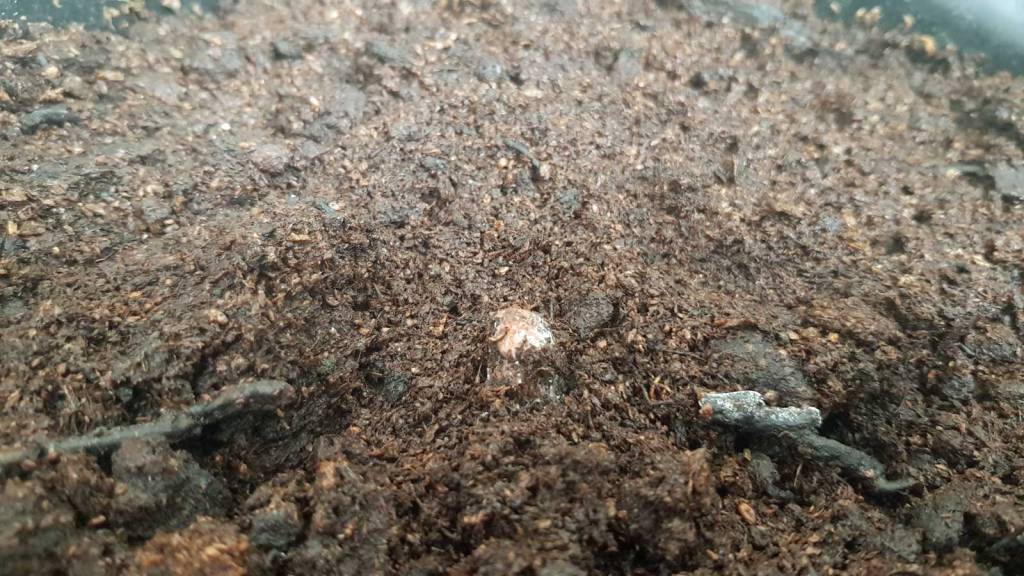
The first cacao baby made its appearance within a week – the first day we noticed something was pushing out of the soil, we were checking it out every hour, to see if it really was growing, or just our imagination.

4 days after planting the beans in the soil – First cacao plant making its appearance

The first one started to grow quite quickly and within a few days the green stalk was clearly visible. We decided to name this first cacao baby “Sean” (after a certain British actor with the surname Bean). 

Our first cacao baby – Sean

For a couple of days, we thought that’s it – the rest all died. Then to our surprise, the second one appeared. Then the third, and the fourth, …. all from our shower cubicle “plot”. Still no sign of any life in the greenhouse plot for about 2 weeks! But then suddenly the ones in the greenhouse plot started appearing one by one too, just as the long heatwave of 2018 started. 

Few more cacao babies in our “Plot 2” – the Greenhouse

By the fifth week, there were 13 in total, and we thought the last one just failed because we ran out of good soil and we just put whatever soil we could get hold of to plant this last one, and so imagined our joy when the last one also appeared also, nearly 2 months after we put the beans in the soil!

Last but not least – Cacao baby No. 14 – “PJ”

It’s really fun to watch the cacao plants grow from the start. We have seen cacao plants at various stages of growth when we visited cacao farms in South America, but this is the first time we could see them grow every day.

We knew very early on that we would not have the space to keep all 14 plants when the winter approached. Fortunately we have many friends who are keen to become the parents of our cacao babies – we were inundated with adaption requests! Here are some of the parents of our cacao babies:

Some of the parents for our cacao babies: James, Charles & Steve, Hazel, Steve & Stephanie

So what have we learnt in the past year? A lot! Here are a few interesting observations:

(1) Growing cacao is not as easy as you think

Despite our 100% success rate in getting a plant out of every bean we planted, not all of them have survived to see its first year birthday. One of them died while in our care (more on that in the next point), and a few friends have failed to keep their plants alive – probably due to temperature (well, we can all wrap up warm if it gets cold at home, but cacao likes the warmth), humidity (not watering the plants enough?), soil quality (we fed our cacao babies with some seaweed-based plant food in autumn and they seemed to grow much better after that). But there are some success stories also – look at how well the cacao baby is at James’:

1-year old baby cacao at James’ (J Cocoa)

(2) Importance of plant management

While getting them to grow seems hard enough, looking after them is just as hard! One day we spotted some holes on the leaves on one of our cacao plants in the greenhouse. We didn’t think too much of it because we expect some hungry insects around. However, as the week went on, bigger holes appeared and one of the leaves was nearly devoured. 


The hungry caterpillar helped himself to this poor cacao baby in our greenhouse

So we started looking for the culprit, and at the same time we moved all the other plants out of the greenhouse to stop anything spreading. The next day we found a caterpillar underneath one of the leaves when we did a thorough inspection – that’s when the caterpillar met its demise. We thought the plant would just grow back somehow, but alas, it started to deteriorate no matter what we did, and in the end it just died. So imagine at a farm level – inspection of any pests or disease is key in cacao management. We could easily move the plant pots away. But if the trees are in the soil and there’s disease developing, there’s no luxury to pick them up and move them away, and if it’s not dealt with promptly, the disease would spread and devastate the whole farm (or worse) – this is what happened in many countries, and also in other plants. This really brings home the work at the cacao farms – careful management and keeping an eye on the diseases is key.

(3) Are they growing or not?

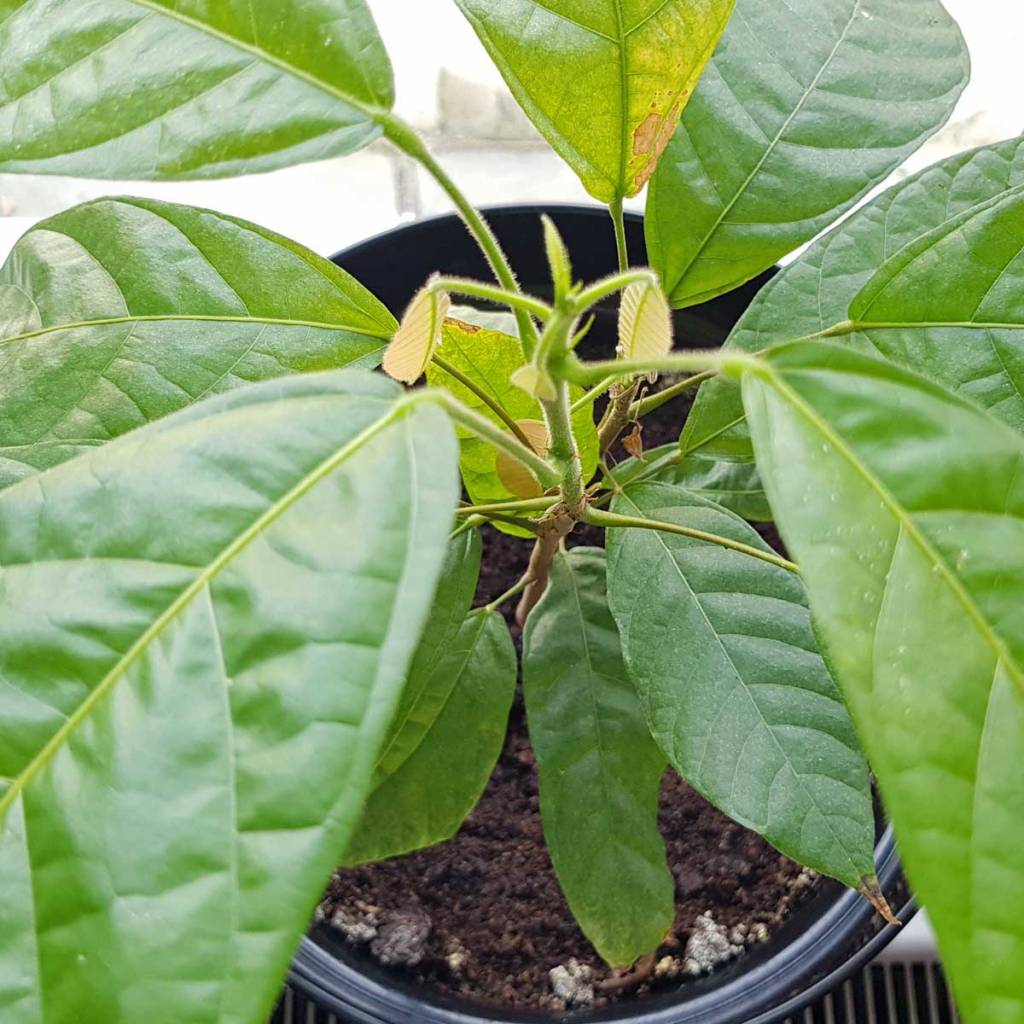
Not sure if it’s the British climate, but the plants go through phases of rapid growth (a few new leaves all appearing at the same time and the plant grows noticeably taller very quickly) and “hibernation” (when all growth just seems to have stopped). So we are constantly asking ourselves “are they still OK or not?” – the stress of parenthood!

To grow or not to grow

(4) The new leaves are not green!

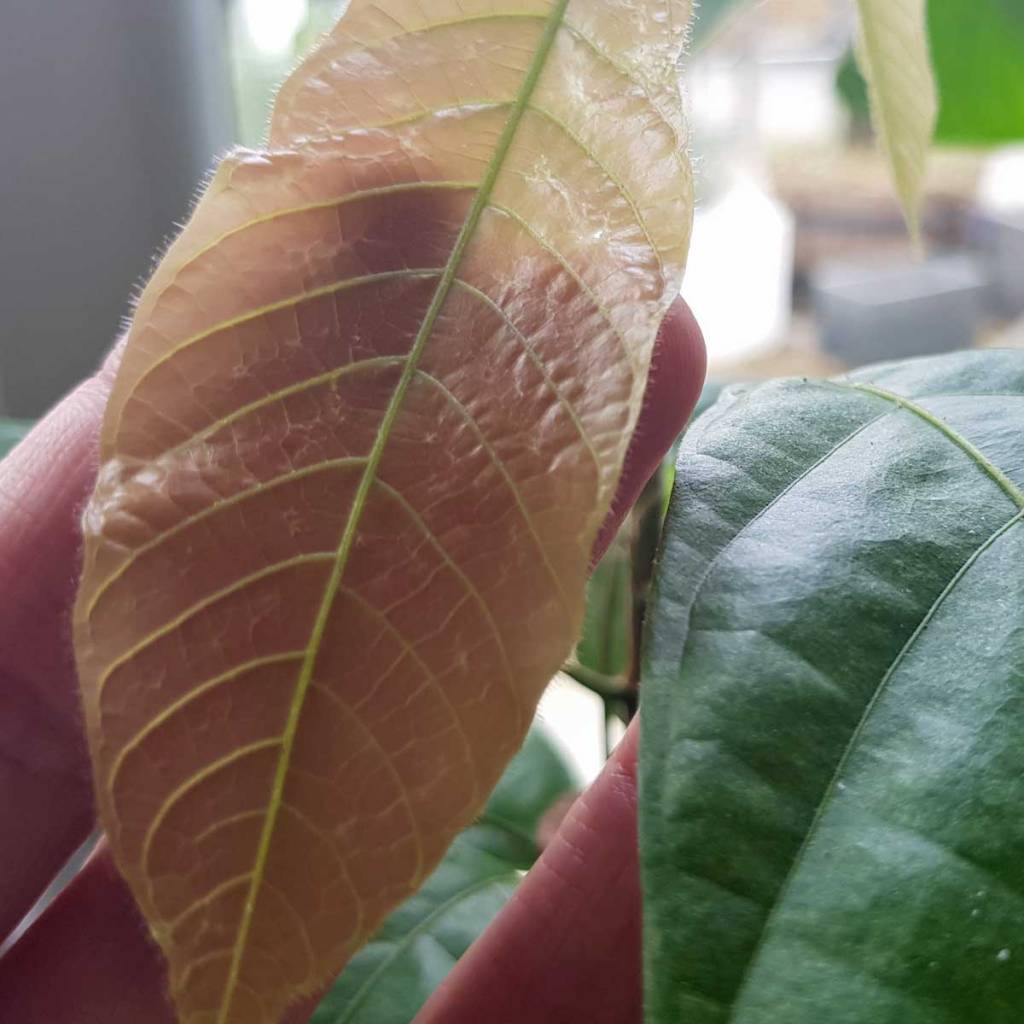
When the plants were very young, you just see green leaves coming out – anything turning brown is not a good sign. However, as the plants get more established, the new leaves that are coming out now appear more brown (and almost translucent), and gradually when they get bigger, they turn green and thicken. 

Never judge a leaf by its first appearance: brown and thin – doesn’t look very healthy like that, but now it’s a lush green colour

(5) It takes years to get any cacao (if at all)

Some friends seem to think that they will be able to see the cacao pods on their plants by now. No chance! It takes a few years to get the first cacao pod even in the tropics. In London, without a dedicated heated greenhouse, that’s out of the question really. And without the midges in the tropics that usually do the job of pollinating the cacao flowers, we are not holding our breaths on getting any cacao pods. It’s taken Kew Gardens and Chelsea Physic Garden many years to get their cacao pods on their cacao trees, and they have dedicated facility to grow the plants in this challenging latitude. Here is one of the trees at Kew Gardens.

Cacao tree at Kew Gardens – I think this one is over 30 years old

(6) Finding the right spot to grow it at home is not easy

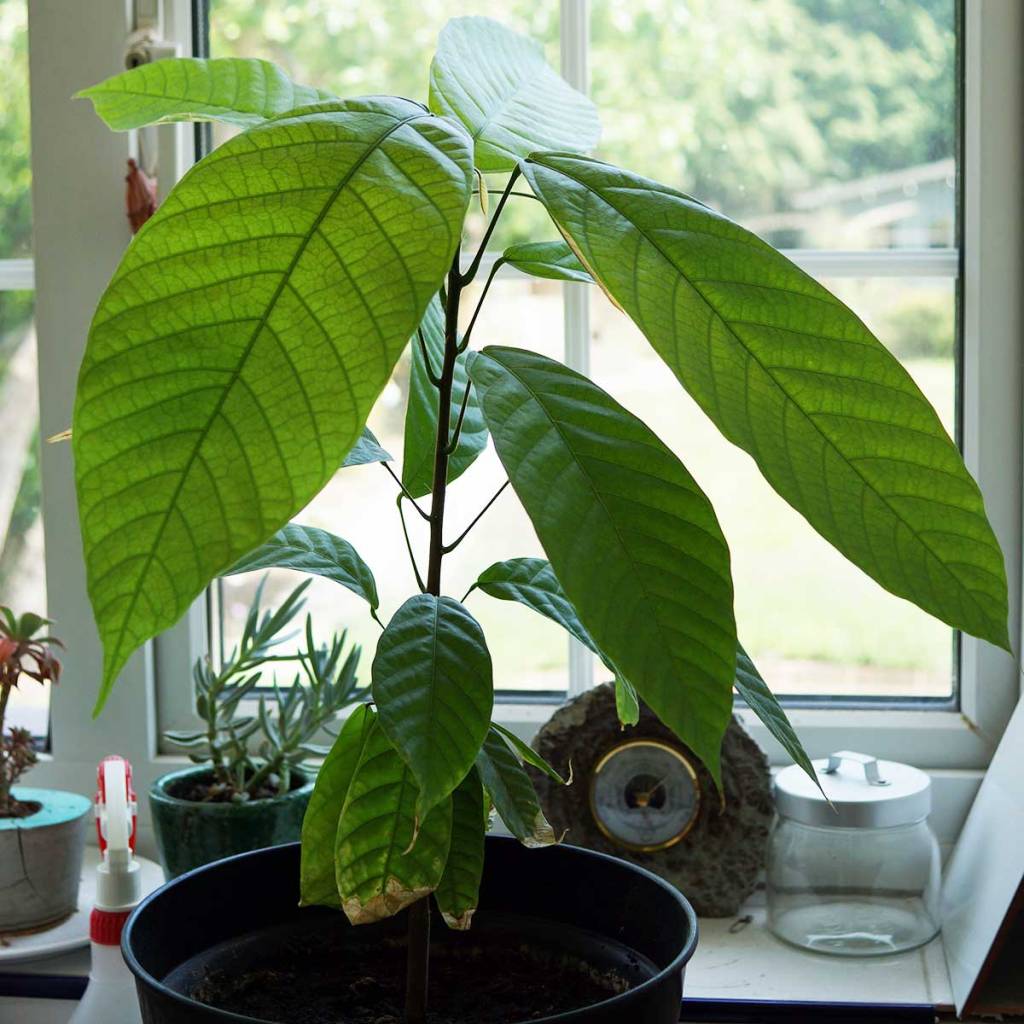
Our friends have put them all in different places: bathroom may be warm and humid when you have a shower or bath, but if you are out all day and the heating is switched off, the cacao plants don’t like that; conservatory can be nice but if there’s too much direct sunlight, it will scorch the plant; other rooms in the house may be too dry especially if you have the heating on, and remember to feed the plant lots of water. We seem to have found our sweet spot at home – north-facing window (so the plants only get a bit of direct sunlight early in the morning), on the window sill, just above the radiator! And each plant drinks about half a litre of water a day! Our cacao babies seem to have happy there! 

Our cacao babies do love the radiator – keep them warm in the harsh British winter

Would you want to have a go at growing cacao, now that you have read all the trouble we’ve been through?

​International Chocolate Awards World Final 2018 – A Night To Remember

In the past few years, International Chocolate Awards (ICA) World Final awards ceremony was always held at the Chocolate Show in London in mid-October. By the time we attended the ceremony, we were always so tired that we couldn’t properly enjoy the event (all we wanted was to go home and sleep), and didn’t appreciate that this was equivalent to the Oscars in the chocolate world, when many top chocolatiers and chocolate-makers from all around the world all gather in one place every year.

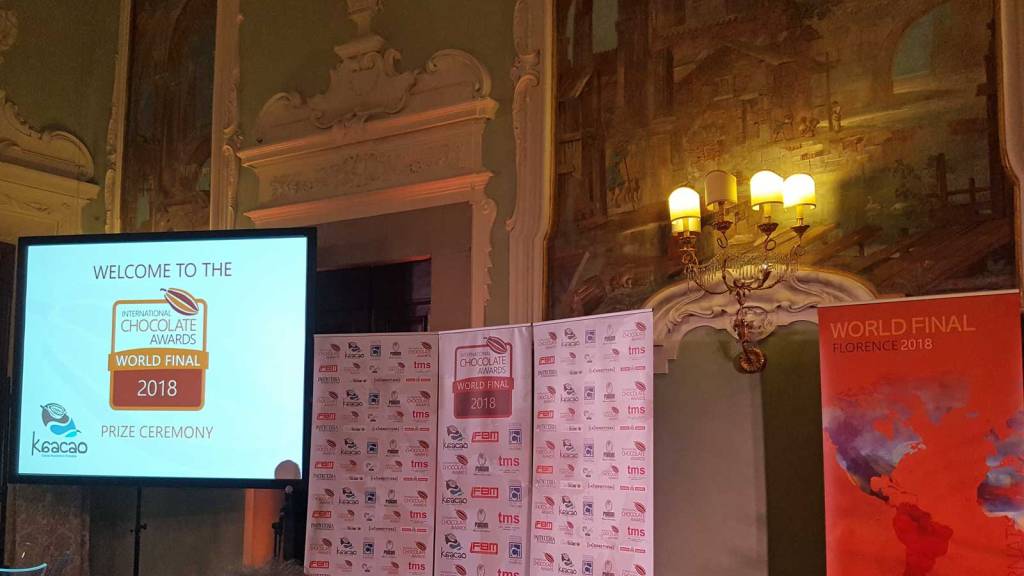
This year, on Saturday 17 November, the ceremony for the 7th edition of ICA World Final moved to Florence in Italy, with a gala dinner. Alas, it clashed with the Shrewsbury Chocolate Festival and we promised Julia the organiser that we would exhibit at this festival. Albert got the short straw and ended up working at the Shrewsbury show while I could attend this year’s ICA World Final ceremony.

I got to Florence the day before the ceremony – after all, I couldn’t risk the chance of any travel delay and miss the event. It gave me a chance to meet up with a few other chocolate friends the evening before the ceremony – a delicious meal at Coquinarius with friends from the USA, Canada, Taiwan and Japan. 

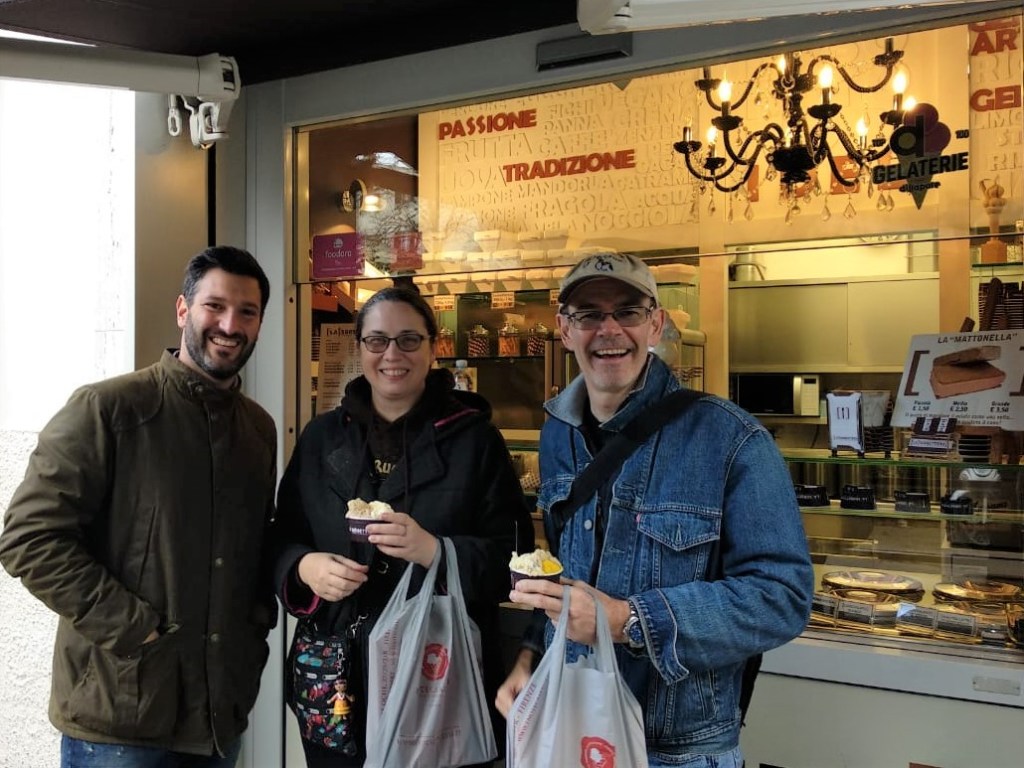
On the Saturday, I took George Gensler (one of the founders of Manhattan Chocolate Society in New York, and an ICA grand jury judge) and Meybol Vadillo Moran (owner of Meybol Cacao) to Gelateria La Sorbettiera – We met up with Antonio, the owner of this brilliant ice-cream place. I had to give Antonio a jar of our soy caramel sauce since we forgot to bring him one earlier in the year when we met him, and of course we had to try some of his delicious gelato. 

We also walked around the city and enjoyed the obligatory coffee stops along the way. Then it was time to get ready for the ceremony.

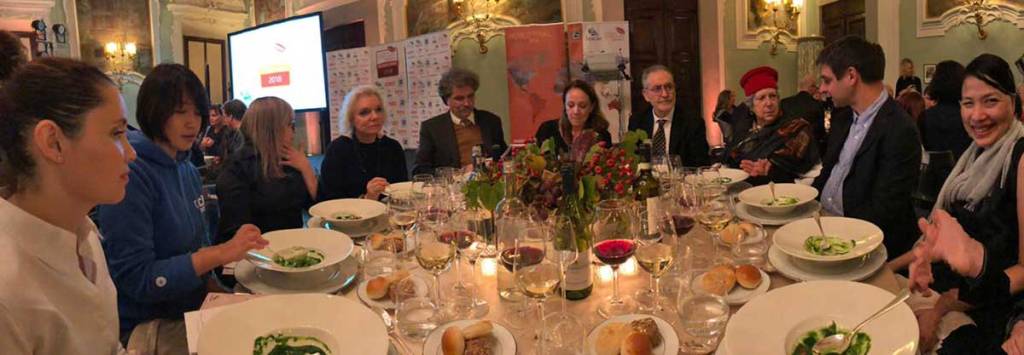
The ceremony was held at Palazzo Ximenes-Panciatichi – a beautiful venue. I brought along 2 of our winning chocolates in the British competition for sampling before dinner, and then I walked around with a glass of wine in hand, and tried a lot of samples that other regional winners have brought along and mingled with many of them.

As soon as I entered the dining room, Maricel Prescilla (one of the ICA Grand Jury judges in America) invited me to join the Americas table, and made me an “honorary American” for the evening! Now, an American with a Yorkshire accent – that’s confusing!

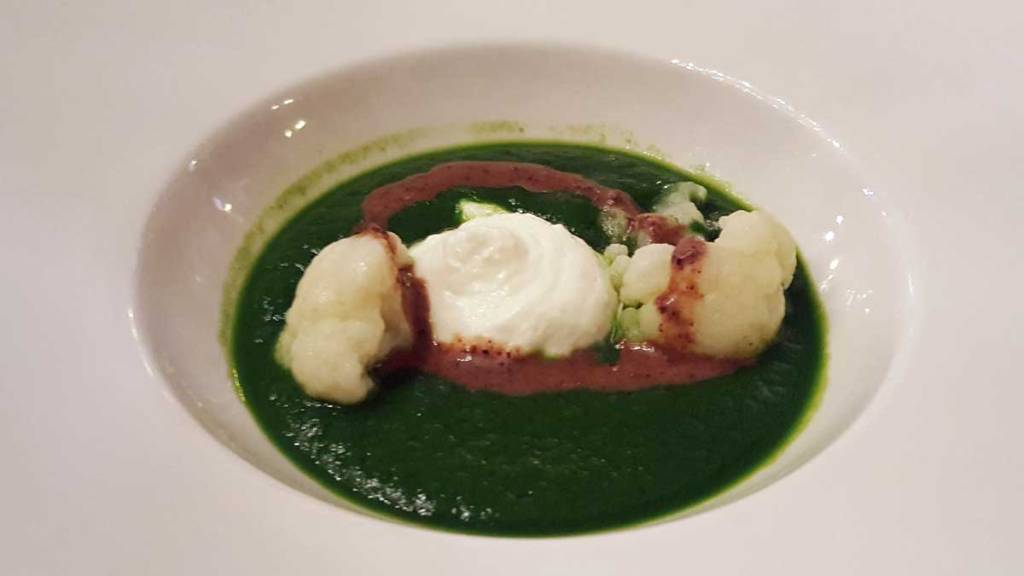
The gala dinner was a 4-course meal, designed by Corrado Assenza, a famous chef from Sicily:“Sensibility” – Cream of mustard, cauliflower flakes, sheep ricotta cheese, with a cocoa nibs light sauce

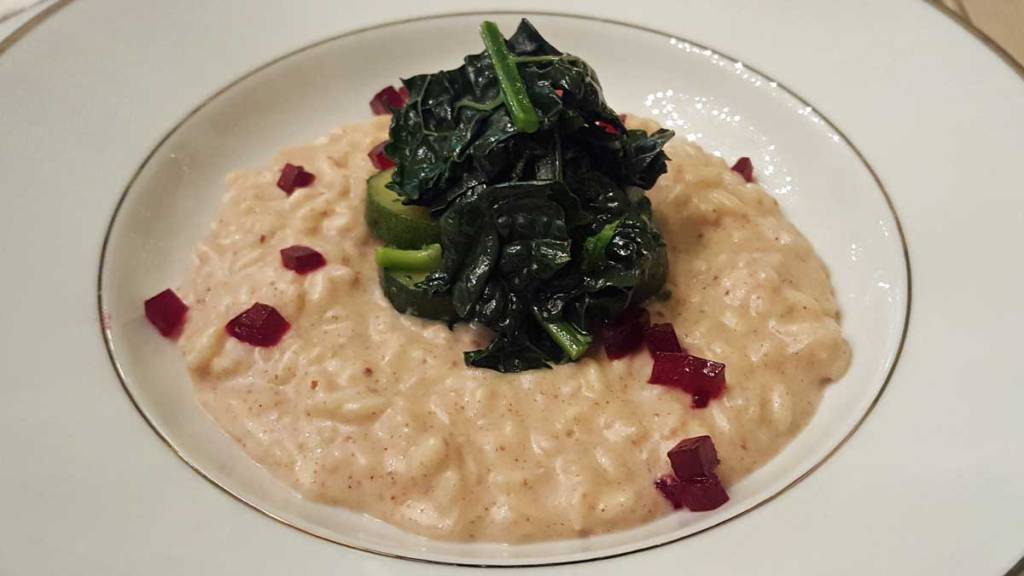
“Fantasy” – Risotto with almond from Noto, crunchy courgette, black cabbage and beetroot

“Harmony” – Lamb roast with its cocoa and Dibaldo vermouth gravy, chickpea cream, carrot and hazelnut from Nebrodi mounts

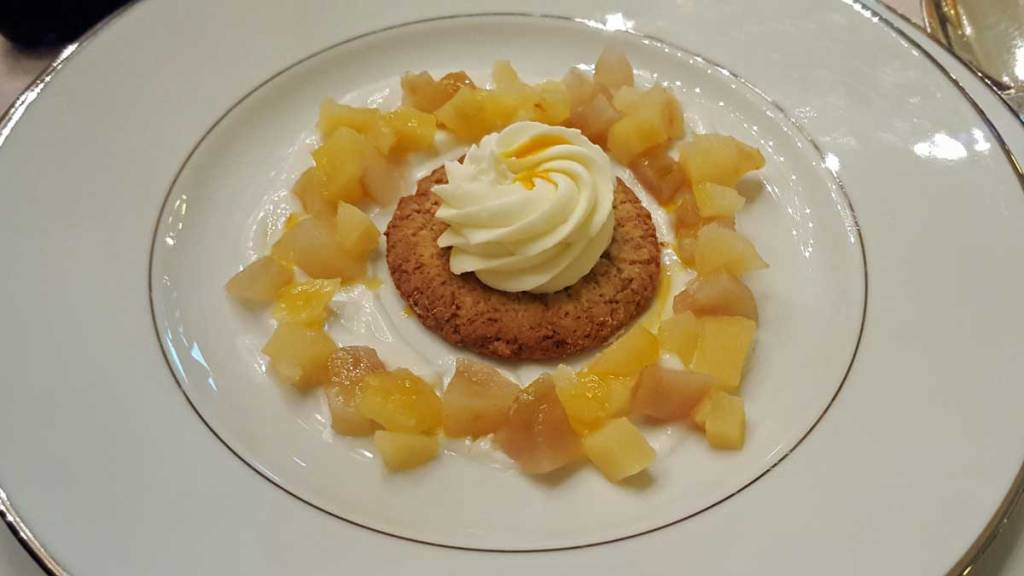
“Simplicity” – Orange flavoured milk double cream, pear, apple, sauce of almond from Noto, lemon biscuit, saffron drops from L’Aquila

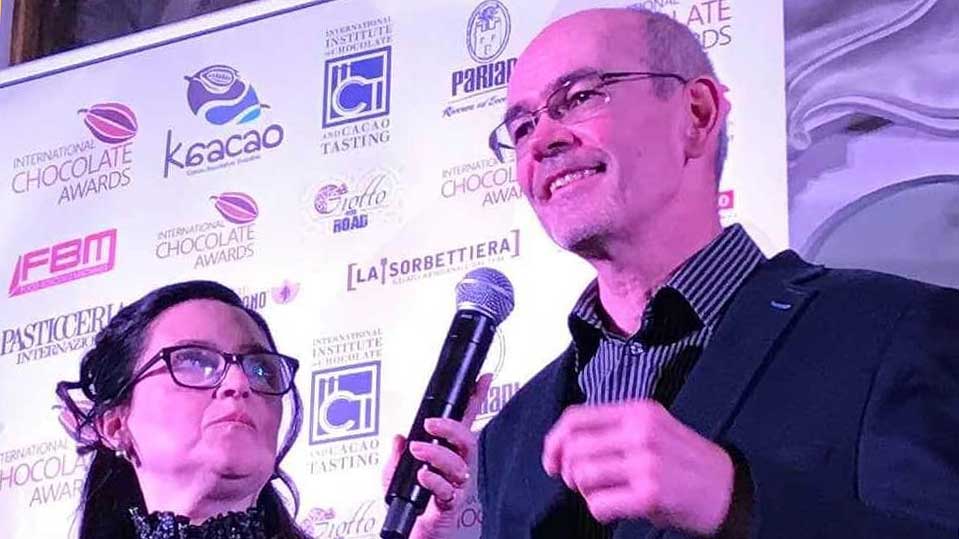
During dinner, the three brains behind ICA (i.e. Martin, Maricel and Monica) started announcing the results. While this is the 4th year we have participated in this competition, it doesn’t feel any easier – if anything, the competition felt tougher and tougher each year, and I didn’t really have any expectations coming to Florence.

The first category that we were up for an award was the dark chocolate enrobed caramels category. Our name wasn’t called out for bronze, and then another company’s name called out for the first silver. Then Maricel said “then we have another silver for a confection with something from the Arctic, and it’s a thyme caramel” – oh that’s got to be our “Akureyri” (Arctic Thyme Caramel) surely?! But I couldn’t be absolutely sure until I heard “Fifth Dimension” being called out. I went on stage, and disaster!!! They couldn’t find any certificates for that category as they were all misplaced, so there’s no picture with the certificate. Still, I was over the moon with this silver award, as it’s our fifth caramel to have entered the World Final and all 5 caramels have won in this world competition.

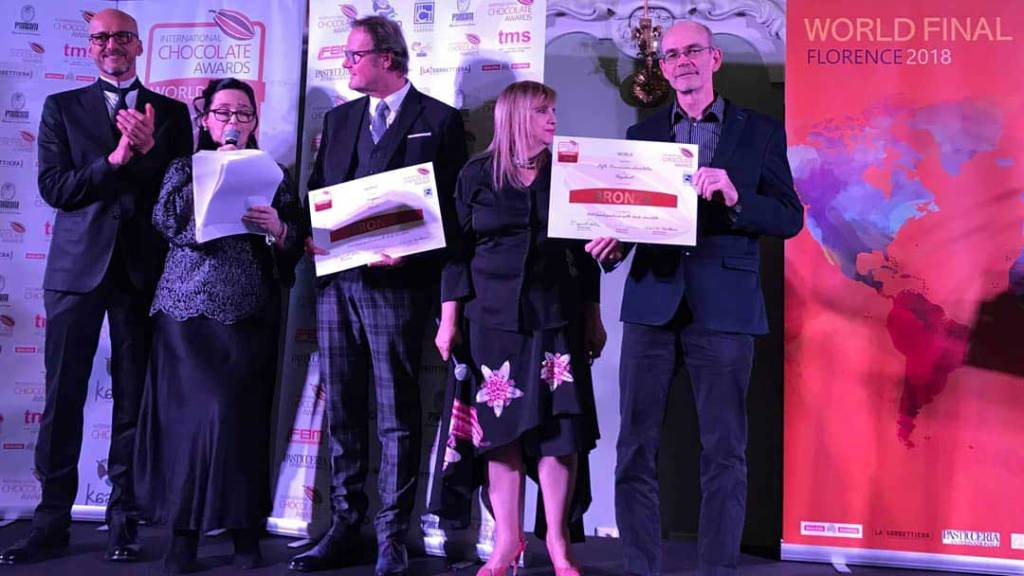
After another string of awards in the next 20 minutes, it’s the turn of the “Nut based pralines with dark chocolate” category. This category has traditionally been dominated by the Italians and a few friends thought that we were mad to enter this category when the chance of winning was so slim. While our “Turin” (Hazelnut) won a British Gold in September (which was a pleasant surprise in itself), we didn’t place any hope on it in the World Final, especially we’ve gone back to basics with this chocolate and did not pair it with another flavour to create an unusual combination. All we did was to use the best quality hazelnut paste and dark chocolate we could get, and make a classic gianduja-style bonbon. So imagine how shocked I was when “Fifth Dimension” was called out for a bronze award. It really made my day to be standing next to the top chocolatier Guido Castagna who always wins the top prizes in this category.

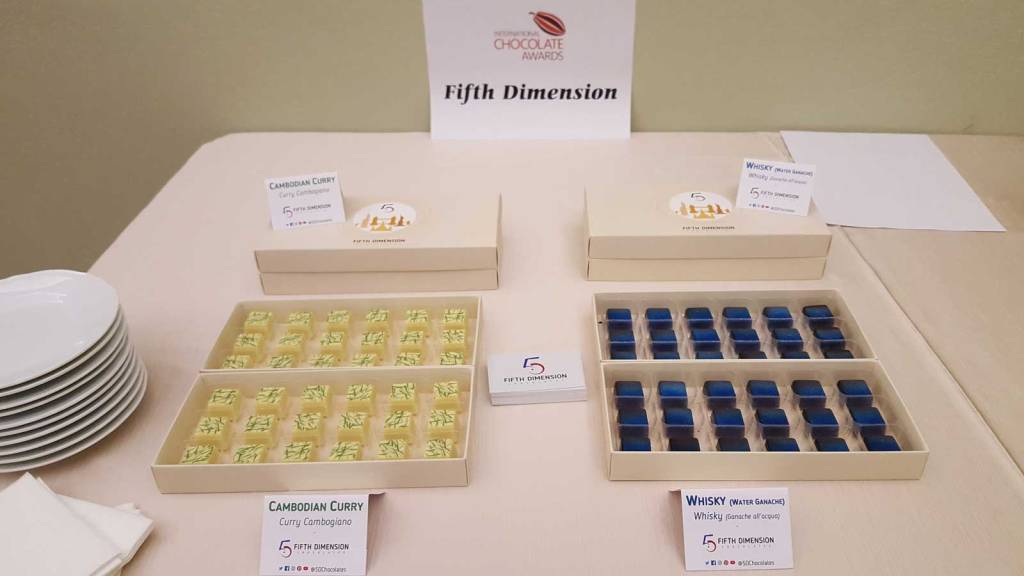
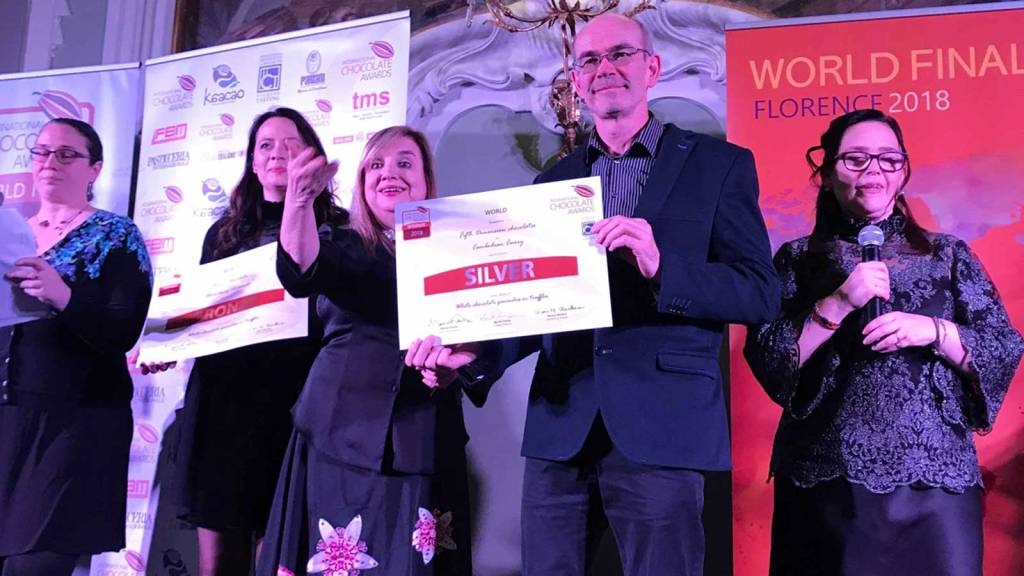
While I was tugging into the dinner, the winners for the “White chocolate ganache” category was announced. This was another category that we have never entered before, and our “Siem Reap” (Cambodian Curry) is one of our newest and most innovative flavours in our collection. Some people who have tried it thought that it was exactly like eating a Southeast Asian curry and then it turned into a chocolate in the mouth – they thought we were messing with their minds, just like what Heston Blumenthal would do to food. I was so happy to collect another silver award for the night.

The evening then continued with more awards announcements, including the flavoured bars and also plain/origin bars. A special mention to our friends from FuWan Chocolate winning Gold in the dark chocolate flavoured bars category with their Tie Guan Yin Tea 62% cacao chocolate and also Soma Chocolatemaker winning overall best in competition for their dark chocolate bar Guasare.

Then it’s the big group photo time on stage.

And it’s still not finished yet – there’s gelato from La Sorbettiera after the ceremony, and as soon as I saw Antonio with his delicious gelato, I just had to make a dash to his little van! There were a few flavours made with chocolates from several award-winning chocolate-makers – the most memorable one was one by Friis-Holm. A delicious way to finish the evening.

By the time we left the beautiful venue, it was already past 1 o’clock on Sunday morning! Tired, but such a great evening with lots of chocolate friends, old and new! Thank you to International Chocolate Awards for the event and getting so many people from around the world together, and of course thanks for the awards we have received.

How to Judge Filled Chocolates

As we make filled chocolates ourselves, this is probably the easiest and most enjoyable category for us to judge in competitions. At the Academy of Chocolate competition, there are broadly 5 aspects to consider, and an overall score would be based on a combination of these. It’s similar to how we would evaluate our own chocolates when we develop new chocolates and also assess our chocolates on an ongoing basis:

(1) Appearance

Firstly when we look at the outer appearance, we would look for any obvious defects such as air bubbles on molded chocolates , and we have to be careful to distinguish whether it’s a defect in molding or superficial damage as a result of the not-so-caring courier/postman. Holes on the chocolates is never a good sign, as this would mean that the filling will be in constant contact with air and this would shorten the shelf life of the chocolate. If colour is used on the chocolate, some judges would want to see the colour matches with the flavour (e.g. green for herbs, red for berries etc). For us, we tend to not worry about that because using colours not expected with the flavour can just be the creative style of the chocolatier. Instead we concentrate more on the techniques – e.g. is the coloured cocoa butter too thick on the chocolate? Is the chocolate free from air bubbles when a more challenging chocolate mold is used?

Now that’s see if you can identify the problems with the appearance of this chocolate below?

There are several issues with the appearance of this chocolate. First of all, you will notice 2 large “holes” on the chocolate shell – these are air bubbles when making the chocolate shells rather than damage caused by transportation. While chocolate molds with more defined / sharper edges are more prone to air bubbles, these are unacceptably large. In addition, there are “streaks” on one side of the chocolate which would suggest an issue with the tempering of the chocolate – it doesn’t affect the taste of the chocolate. It just does not look appealing. (This one is an extreme example. And just in case you are curious, this is a quick prototype we made for our internal product development, without doing a proper tempering and molding.)

The chocolate is then cut in half (or if we haven’t got a knife handy, we would just bite the chocolate in half) and we would assess the inside – for example, is there an even coating of the chocolate? Does the filling bind well to the chocolate or does it come apart very easily?

(2) Aroma

The smell of the chocolate shell and then the filling usually gives a good indication on the quality of the ingredients used. If the chocolate has a burnt smell or the filling has a synthetic smell or artificial smell, that is usually not a good sign. Sometimes people take shortcuts when they use flavouring oils or essence completely in the filling rather than just using a tiny amount to lift the flavour of the actual fresh ingredient – we usually don’t like the smell of the oil/essence as it can never substitute the real thing when it comes to flavour. 

(3) Texture

Is the coating smooth and has a nice melt? Does the filling taste fresh and does it have a nice texture? For a caramel-filled chocolate, while we normally prefer softer caramels, some chocolatiers would make harder caramels – this is fine as long as the texture works with the chocolate. For layered fillings such as jelly/pate de fruits and ganache, we would usually look for the contrast in texture as well as the ratio of jelly vs ganache. If the jelly is too hard, it doesn’t usually work well with the ganache – it all comes down to the mouth-feel.

(4) Flavour

The filling should have a balanced flavour with the chocolate, whether it’s a simple single ingredient or a complex combination of flavours involving several ngredients. The important thing is that your mouth should not feel like a battleground for flavours. Some chocolatiers go for bolder flavours while others go for the more mellow flavour profile – it all boils down to the style of the chocolatiers. The way we’d like to describe the balance of flavour is like an orchestra – the different musical instruments (i.e. ingredients) should work together in harmony, and shouldn’t be drowned by heavy drum beats. Last year at a talk organised by International Chocolate Awards during the Chocolate Show London, Russell brought in a batch of our Cape Town (Curry & Raisins) chocolates with twice the amount of curry infused into the ganache for the audience to try, and everyone agreed that while it was still nice enough to eat, the milk chocolate used was lost due to this stronger curry flavour and so the balance was far from optimal.

The quality of the ingredients is crucial. This applies to both the chocolate and to the filling. For example, for nut-based filling, the quality of the nuts used is key, as some lower quality nuts can taste stale or rancid.

Sometimes we may come across flavours that we would usually avoid, as a matter of personal preference. When it comes to judging, we put aside what we like and don’t like, and judge each chocolate based on its merit. Having an open mind is helpful – Sometimes this can lead to some pleasant surprises. 

A caramel-based chocolate cut open, to assess the texture and then flavour

(5) Finish

The aftertaste is just as important as the flavour – Does the flavour linger for the right amount of time, and does it feel balanced and harmonious in the mouth? Also is there a chocolate taste in the mouth at the end? After all, you are eating chocolates and if the finish is not on the star of the show (i.e. the chocolate), that’s not ideal.

Other people have different techniques to evaluate filled chocolates – the above is a simple guide on how we assess chocolates internally and also as judges at chocolate competitions.

Developing new flavours for our chocolates

Every January, one of the questions we get asked is “what new chocolates are you bringing out this year?”. This is usually the time of year when we start planning on the new flavours for the filled chocolates for the year. 

When we develop a new flavour for our filled chocolates, we usually follow these 5 steps (This is an iterative process – Sometimes we have to backtrack to an earlier step, before we can move on):

1 – Inspiration

We often get inspired by flavours we come across when we travel, experiencing local cuisines and ingredients. Therefore each of our filled chocolate is named after a city or place in the world – it doesn’t necessarily mean that the ingredients come from the place, but that’s how we associate the flavour to the place. For example, “Sydney” (Mint & Miso chocolate) always reminds us of the fusion cuisine in this city – the miso is obviously a Japanese ingredient, while the mint comes from our own greenhouse. For our Curry & Raisins chocolate, we named it “Cape Town” because our friend Jane, who introduced us to the South African dish Bobotie, came from Cape Town even though we first tried it in the UK.

2 – Filling

Once we have an idea of the base ingredients we want to work with, we would need to develop the filling. The easy part seems to be deciding on whether it should be a ganache, caramel or something else. Developing the right flavour balance and texture is more difficult – the time it takes to develop each flavour can be unpredictable as we may need to research into how to bring out the flavour more or overcome a texture that we are not happy with. The quickest development is our “Rio de Janeiro” (Banana Cardamom Caramel) which took about 5 iterations (over a period of one month), while the most challenging one is our “Montreal” (Brie chocolate) which has taken us several years to develop this cheese chocolate!

3 – Matching

With the prototype of the filling done, the next step is for us to taste the filling with several different dark, milk and white chocolates, to see which chocolate has the best match with the filling. When we developed “New York” (Apple & Calvados Caramel) and “Hong Kong” (Soy Caramel) in 2015, we actually would have preferred to have one of them in a dark chocolate shell, rather than both of them in milk chocolate shell. However, after testing multiple dark chocolates, we couldn’t find one that worked as well as the milk chocolate, and hence they both ended up as milk chocolate caramels, and competing in the same category in International Chocolate Awards in 2016!

4 – Presentation

We would decide on the design of the chocolate – matching the shape and colour to the flavour. You may be surprised to learn that these actually affect the flavour. For example:

Originally the top choice for the mould of our “New York” (Apple & Calvados Caramel) would have been a rectangular shape with a triangular indent on top – the triangle represents the shape of an apple pie which is the inspiration behind this flavour. However, when we made a test batch using this shape, vs another batch using the current half-round shape, we found that the latter actually worked far better even though we were using exactly the same filling and the same milk chocolate couverture.

One time we made a special batch of “Bangkok” (Mango & Passion Fruit Caramel) for an awards ceremony, using a blue colour on the chocolate. When we did the tasting, we were so convinced that it’s actually a different flavour altogether, even though we knew it was mango and passion fruit. Quite interesting to learn how we eat with our eyes!

5 – Final Test

When we are happy with the chocolate, we would give the “near-finish” product to selected people and ask for feedback. Often we would just need to fine-tune the flavour to improve the balance, but on a couple of occasions we had to go back to the drawing board.

Even when the chocolate is available for purchase, we would continue to tweak the flavour whenever we can, based on customer feedback.

Piet Mondrian and Chocolates

This year the organiser of the Chocolate Show asked if we would like to participate in the Choco L’Art exhibition at the show. We are not artists in any shape or form, but we thought that it would be a fun challenge for ourselves.

It didn’t take us long to come up with our choice of artist – Piet Mondrian. He’s one of the few artists that we both like. 

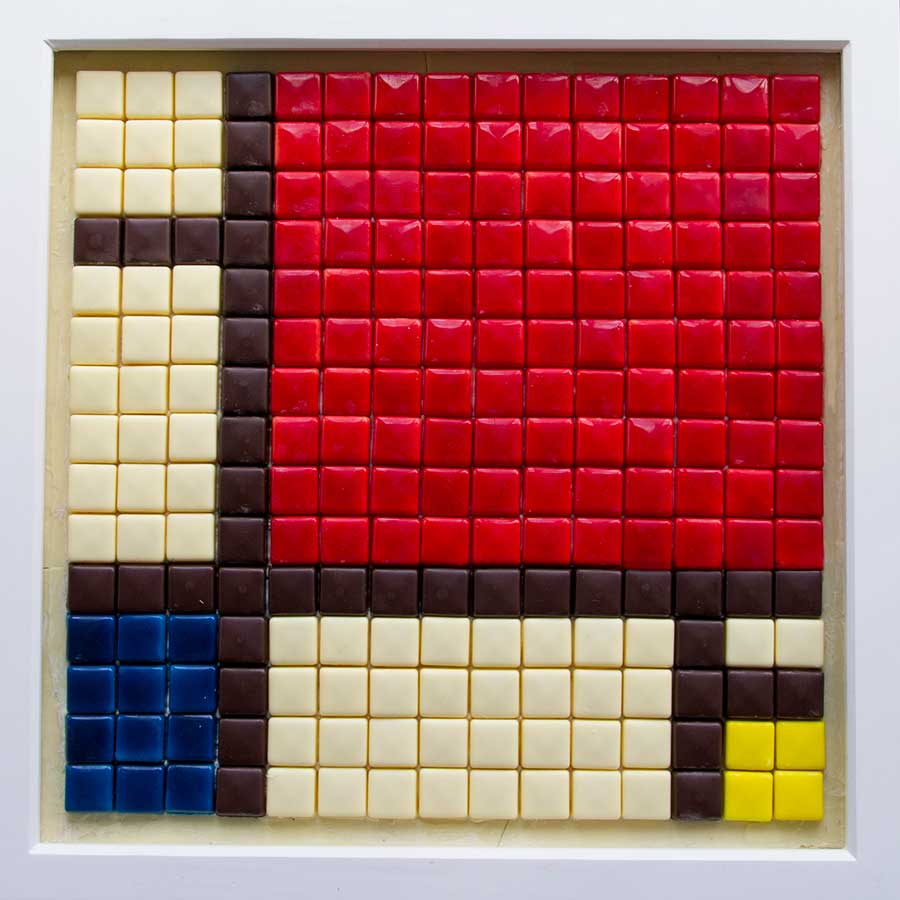
There are many Mondrian’s masterpieces that we can choose from, and in the end we have settled for one of the most classic ones – Composition in Red, Blue & Yellow (1930), partly because we have a large reproduction of this picture hanging on the wall in the house! So we can refer to it when we construct the chocolate version. In our opinion, this is probably one of the most iconic art pieces by Mondrian also.

Instead of just a flat 2-dimensional painting, we decided to go with a 3-dimensional approach to give it a new perspective. Some of our chocolates already resembles the colours in the painting, e.g. Orleans (Raspberry & Chambord) for the red, Nadiad (Lemon Chutney) for the yellow, and Warsaw (Blackcurrant & Pernod) for the blue. However, since the later paintings by Mondrian were mostly straight lines, we decided to opt for a geometric shape that would allow us to build the picture in a mosaic style.

(Interesting sidenote: many customers have always commented on the geometric shapes of our chocolates and the way we decorate some of our chocolates…. We never realise this until we started making this picture – subconsciously our style is somewhat influenced by Mondrian!)

To build this chocolate Mondrian painting, first we had to make the blank canvas made from white chocolate. Then each piece of chocolate was air-sprayed with coloured cocoa butter to give the vibrant colour (and even the white ones were sprayed with a white cocoa butter to give a more vibrant white colour, rather than just plain white chocolate which was a slightly off-white yellowish colour. Then we assembled the whole picture by placing each piece onto the white canvas. Here’s a time-lapse video of the assembly of this picture:

The whole chocolate version of this Mondrian’s masterpiece weighs a whooping 8kg (yes, there’s quite a lot of chocolate in there).

Necocli – Educating the next generation

When it comes to sustainability in cacao, one of the important aspects is to do with the education of the next generation and their well-beings.

In July, I visited a project in Necocli in Antioquia department in Colombia. Several schools have been built in the area to improve the education of the children. The first time I heard about Necocli was in late 2015, from this rather cute music video sent out at Christmas by Casa Luker:

The area of Necocli and Antioquia department has traditionally been plagued by conflicts and drug trafficking. So there’s a lack of trust and social interactions in the community, and the children had become very shy and introverted. Also there’s a lack of steady jobs in the area (due to the instability in the region), meaning that the area has been very poor, and has been neglected by the government as there are more pressing priorities in the country.

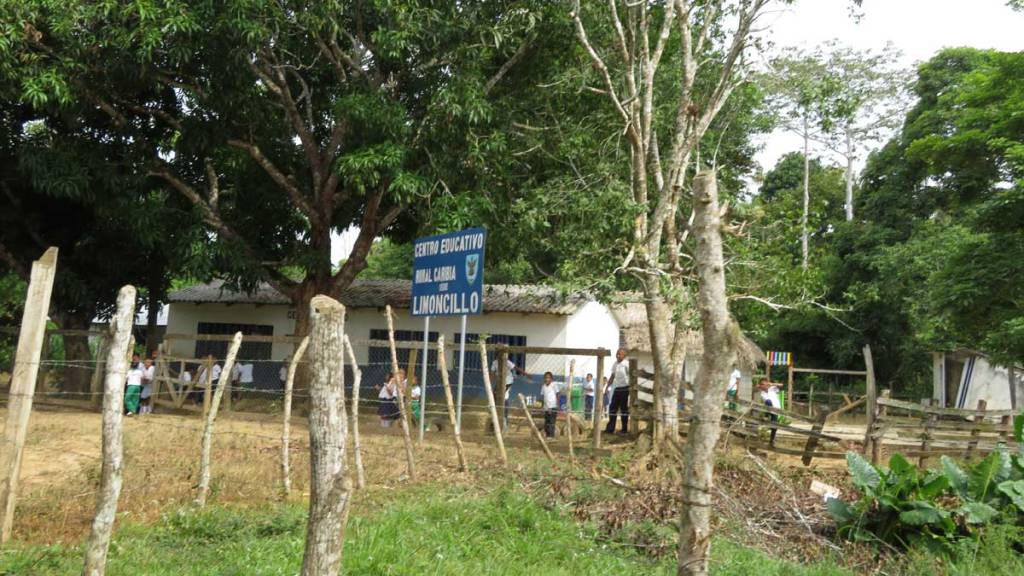
In the early stages of the Chocolate Dream project by Casa Luker, one of the needs they have identified was in education of the children and how to improve the existing infrastructure in the region. As a result, they called in Luker Foundation (Fundacion Luker) to help to develop the education programs and techniques to some of the schools in the area. I was very lucky to have visited the Limoncillo school in July 2017, to understand first-hand what the project was all about.

I was pleasantly surprised that when we arrived at the school, as the children were warm and welcoming. Despite my lack of ability to speak Spanish, the children were approachable and their smiles were infectious, putting me at ease very quickly. I was told afterwards that the children were very quiet and scared when the project started a few years ago, due to the social instability and crimes they might have witnessed – something I wouldn’t have realised, based on how happy and welcoming the children were during my visit.

The school was not big – only 2 classrooms manned by 2 teachers, with 60 children spreading over 6 grades. A huge difference to most schools in the western world. Children from the same grade would sit together round a table, and there were school books they could study and work through, while the 2 teachers would go round each table and spend time with each grade during the day. The teachers have really got their work cut out for them, but there is a variety of books and teaching materials that the children can work through during the lessons. 
One thing that I have noticed is the awareness and education on recycling plastic bottles. The children have made hanging baskets, playground furniture and indoor decorations using bottles and other plastic materials. There are bins and bags to collect used plastic bottles in the classrooms as well as in the playground.

The school hours are from 7.30am to 12.30pm. While the school serves the local community, most of the children have to travel an hour or so each way, either on foot or riding donkeys. The road access to the school was rather poor – it’s muddy even when it’s not been raining for a few days, so I could only imagine what the children had to endure on their school journeys during the rainy season. 

I also had a chance to visit the construction site for a new school nearby. While the government providing the funding and management of the construction of the school building, there are many other aspects that need to be considered and this is where the funding needs to come from private businesses. For example: desks, chairs, books, boards, and even water and toilet facilities etc are all essential at a school, and it’s not just a matter of building an empty shell. In addition, road access, electricity and other utilities all have to be considered – there’s no point in building a school without addressing these other infrastructures. Government and various organisations (including private companies) have to all come together to work this out.

With the education of the next generation, it provides hope for the future in this area with a troubled past. The area is beautiful and hopefully some of the children will become cacao farmers – it’s not just a manual labour job with no education requirement. With a better education, these future farmers will bring new knowledge and modern agroforestry management to the farms, and in turn produce better quality cacao. In my opinion, this is one of the keys in ensuring sustainability in cacao, and an important piece of the jigsaw in protecting the future of cacao.

Necocli – A Chocolate Dream in the Making

Earlier in the summer, I spent a few days in Colombia en route to Peru. As you may be aware, at Fifth Dimension Chocolates we love using chocolate from Colombia – apart from the quality of the fine flavour cacao (cacao fino de aroma) grown in that region, we feel comfortable with the way our supplier, Casa Luker, operates in Colombia, having seen with our own eyes every step in cacao research and trainingsourcing and purchasing cacao from the farmers and chocolate production back a few years ago.

This time, one of the projects I was most interested in was their Necocli project. I heard and read about the Necocli project at the end of 2015, and I wanted to find out more about this project. Before the visit, all I knew was that Casa Luker was helping the children and there was a new farm in the region.

Necocli is in the Antioquia department in the north-Eastern part of Colombia, right by the Carribean Sea. It’s a 1-hour plane ride from Bogota to Monteria, and then a 2-hour car journey to Necocli. This area has seen its fair share of conflicts with drug gangs, smuggling and guerrilla fighting in the past few decades, and the work opportunities have been scarce. The area is poor and the government was not able to make a huge effort in improving the lives in the area due to other more pressing priorities.

When I was told that it’s a new cocoa plantation, I was somewhat concerned. You get to hear in the media about companies chopping down rainforests to make way of cocoa plantations in Africa, and then planting monocrop of just cacao trees (which has a devastating effect on the environment and wildlife). However, my fear was totally unfounded once I have toured round the plantation and spoke to the people there. In fact, I don’t like calling it a plantation as the whole area feels far more natural, and so I’ll call it a “cocoa forest” in the rest of this article.

The 550-hectare land used to be a cattle ranch, which employed only 5 people – so there’s very little opportunity for employment for most people in the area. A few years ago, the landowner decided to turn it into something else and approached Casa Luker for technical support to turn the land into a cocoa forest.

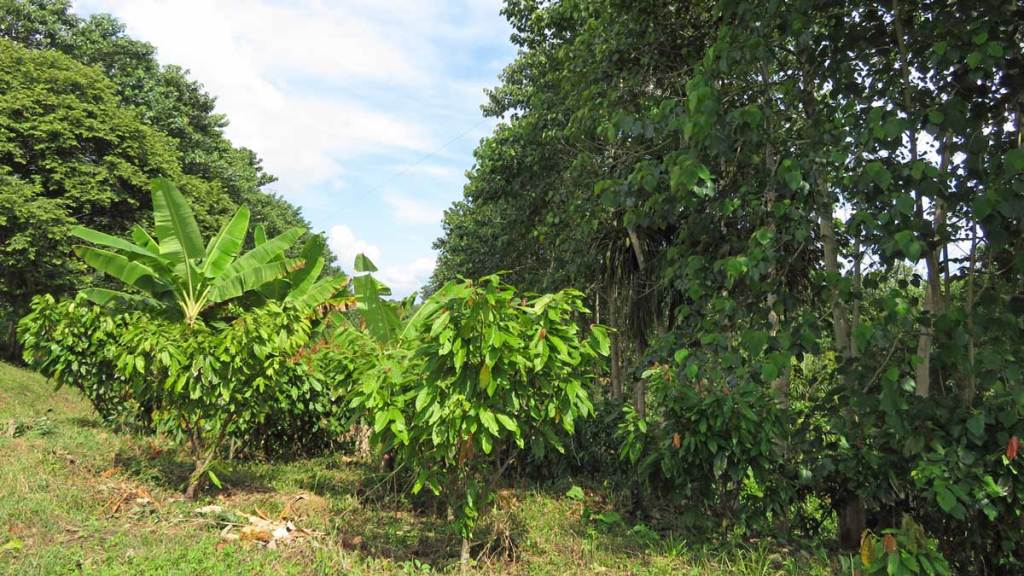
Rather than just rows and rows of cocoa trees and nothing else, the agroforestry system consists of plantain trees, cocoa trees and melina trees – the same model applied to many small farms in Colombia successfully. The plantain trees are fast-growing and start to provide plantains after 9 months from planting – this provides the immediate short-term income. They also provide the shade for the cocoa trees. The cocoa trees only start to produce cacao pods after 3-5 years, and will produce cocoa for 20 years at least, so this means that the future is secured for at least 20 years. The melina trees provide the wood that can be sold in the long term. This system of three different trees also has the benefit of soil conservation (since it’s not just a monocrop taking out the same nutrients in the soil), and an unforeseen benefit of bringing more wildlife into the area – apparently there are now more different birds seen in the area.

The 550 hectares of land have been divided into 5 sections, with multiple plots per section. Several different cacao varieties are grown in each section – all the varieties are of cacao fino de aroma (fine flavour cacao). This means that there’s no chance the CCN-51 (a non-fine-flavour cacao but with a high production yield) can be grown or pollinated in this cocoa forest – a problem often seen in Ecuador and Peru, where CCN-51 is common.

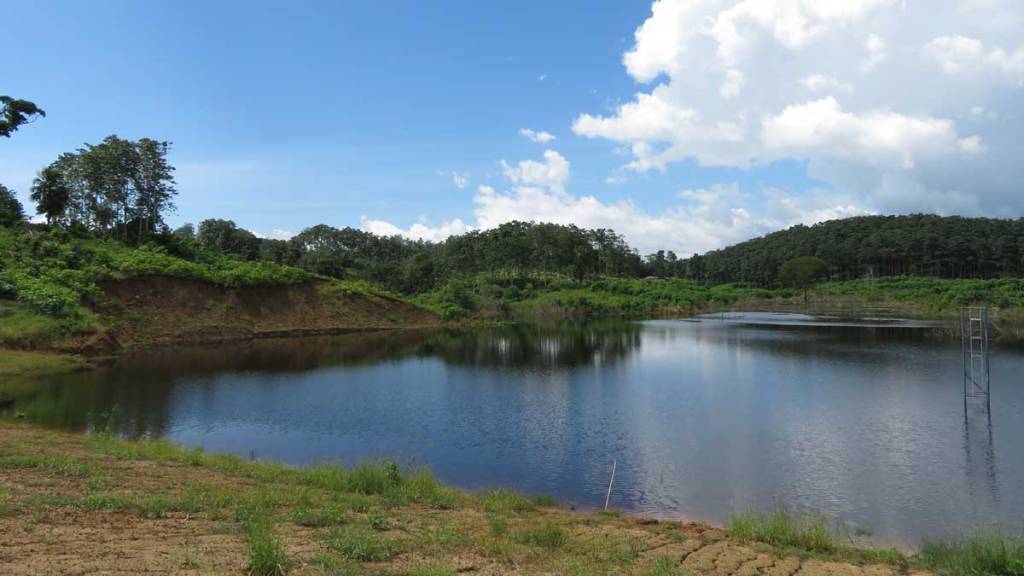
In the last few years, 26 hectares of agricultural land had to give way to a reservoir in the forest. This is because the rainfall has become irregular in the area, with heavier rainfall at times accompanied by longer dry spells. Whether this is due to the El Nino effect or climate change, no one knows. One thing is sure though – without the reservoir, many cocoa trees would not survive because of the lack of water.

Traditionally in the Necocli area, people only had access to low-paid temporary jobs, with no job security, or they ended up working for violent armed groups or illegal trades.

The cocoa forest creates at least 150 new jobs in the area. This is important for the community as many more people in Necocli now have access to long-term employment. Each worker has a 3-month probation period at the start, in order to assess their abilities to see what roles would be most suitable for them. Once this period is over, the worker has a permanent contract, and is paid above the minimum wage – the pay is also based on how productive the worker is also. Each employee also receives healthcare benefits. The working hours are from 6am-3pm Mondays to Fridays, and then 6am to noon on Saturdays.

This provides the workers with a steady income, which means that they have a better quality of life and can concentrate on earning a living and providing the security and stability for their children also. The number of employees is growing – over 300 people will be employed when the cacao trees start to produce pods for harvest at the end of 2017.

There are 2 aspects that I am really looking forward to, after visiting the cocoa forest. Firstly, I can’t wait to try the cacao from Necocli and see if the flavour would fit in with what we do at Fifth Dimension Chocolates. Secondly, I would love to see how a similar approach can be applied to another area in Colombia to improve the livelihood of the residents.

Panela – Unrefined cane sugar from Colombia

The first time we came across panela was a few years ago when we first visited Colombia. It is very similar to jaggery in India, as it is made from evaporated sugar cane juice and is not refined in the process. Therefore it is considered to have better health benefits because it retains the nutrients (e.g. minerals, vitamins, amino acids) in the sugar cane. It is often used to sweeten hot chocolate and coffee in Colombia. This year we created our first caramel-based chocolate using panela – and we named it Bogotá as we captured several flavours representing Colombia in this chocolate: dark chocolate, coffee and panela.

In Colombia, the more common table (white) sugar usually comes from large sugar cane plantations in the southwestern part of the country, and are run by large companies; while panela is usually produced by small families and farmers who own and run their own sugar cane farms (usually 2-3 hectares per family). It is estimated that there are about 350,000 families producing panela in Colombia.

The process of making panela is:

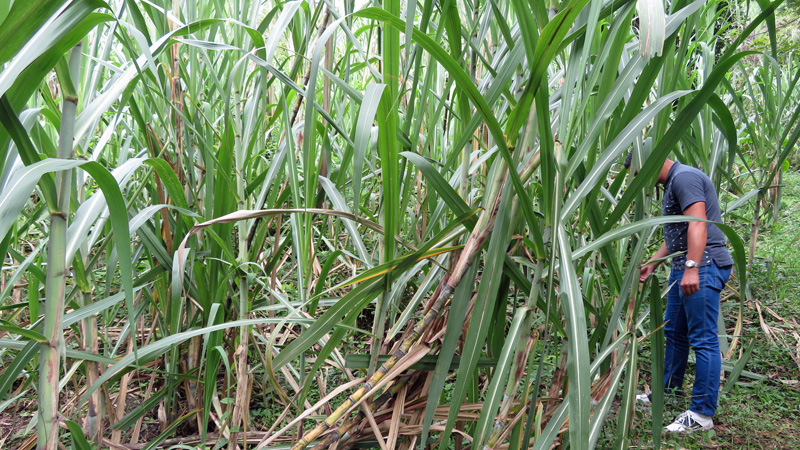
  1. The sugar cane is cut by hand and taken to the trapiche (sugar mill)
  2. The juice is extracted by crushing the sugar cane
  3. The juice then goes through the first filter to remove most of the impurities
  4. The juice is then heated to a temperature of 90C, and further impurities are removed
  5. Through the evaporation process and further heating up to 120C, the sugar cane juice becomes more concentrated.
  6. When the juice is dehydrated and reaches the maximum concentration level, the concentrated juice (a liquid version of panela) is then stirred vigorously by hand until it gets pulverised.
  7. The panela is then put through a sieve so that all the particles are of a similar size, and then it is milled to make the particles even finer. Then it is either put into bags or pressed into “cake” or block form, before being sold.

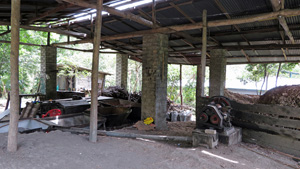
Traditionally the farmers would make the panela manually in their small holdings (picture shows a typical panela production area in a small farm), and then sell them in the local markets. It is hard work working in an environment surrounded by heat and evaporating cane juice, in a hot climate. The issues include the variability of quality and lack of quality control (since the knowledge of panela-making is often passed down through the families), and the farmers may end up selling the panela at a loss in the local markets, due to the fact that the price they can command in the market may be less than the cost of growing the sugar cane and making the panela at their farms. This is where the farmers need help and support.

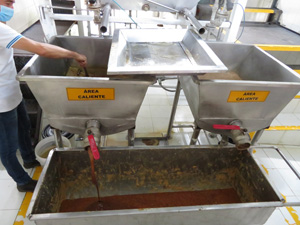
One of the initiatives in Colombia is to improve the method of panela production, by having the farmers growing and supplying the sugar cane to a local trapiche, and then the trapiche would produce the panela in a controlled environment, using more modern equipment to extract and evaporate the cane juice. 

This ensures that the quality of the panela becomes more uniform (e.g. you don’t get panela that may not have been evaporated sufficiently, or burnt due to prolonged heat beyond evaporation), and the farmers can concentrate on the growing of the sugar cane but not have to deal with the nuances of panela production. The farmers are guaranteed a certain price per kg of sugar cane sold to the trapiche.

For more information about panela and the trapiche that we visited, watch this video.

Having seen the production first hand in Colombia, we feel that this is a promising method to improve the production/quality of panela and also the livelihood of the small sugar cane farmers and their families.

Bobotie – Recipe for our Curry & Raisins chocolate inspiration

The inspiration of our Cape Town (curry & raisins) chocolate is based on a South African dish called Bobotie. We were first introduced to this recipe by our friend Jane, and here’s the recipe from her that we’d like to share with you:

Ingredients:

  • 25g butter
  • 1 large onion, chopped
  • 500g minced beef
  • 4 garlic cloves, crushed
  • 3cm fresh ginger root, peeled and grated
  • 2 teaspoons garam masala
  • Pinch of curry powder
  • 1/2 teaspoon turmeric powder
  • 1 teaspoon ground cumin
  • 2 teaspoon ground coriander
  • 2 cloves
  • 1/2 teaspoon powdered all-spice
  • 1 teaspoon dried mixed herbs
  • 75g dried apricots, chopped
  • 1 tablespoon apricot jam
  • 50g flaked almonds (plus extra for topping)
  • 4 tablespoons chutney (we use mango chutney)
  • 4 tablespoons chopped parsley
  • 4 bay leaves (plus extra for garnish)
  • 250mg whole milk
  • 3 large eggs
  • 50g raisins or sultanas
  • Salt & pepper to taste

Method:

  1. Pre-heat oven to 180C / Gas 4
  2. Heat butter in a saucepan and cook onions until soft. Set aside
  3. Heat a large frying pan over high heat and fry the beef without oil, until brown.
  4. Remove the beef from the heat and add the onions together with all other ingredients, except milk and eggs. Mix well and put in 4 x 300ml oven-proof bowls or a large oven-proof dish. Press the mixture down with the back of a spoon. Allow to cool completely.
  5. Beat the milk and eggs together lightly and pour over the mince mixture. Bake for 20-25 minutes for small Boboties, or 30-40 minutes for a large one, or until the topping has set and is golden brown.
  6. Sprinkle more flaked almonds and add more bay leaves for garnish if you want (we don’t usually).

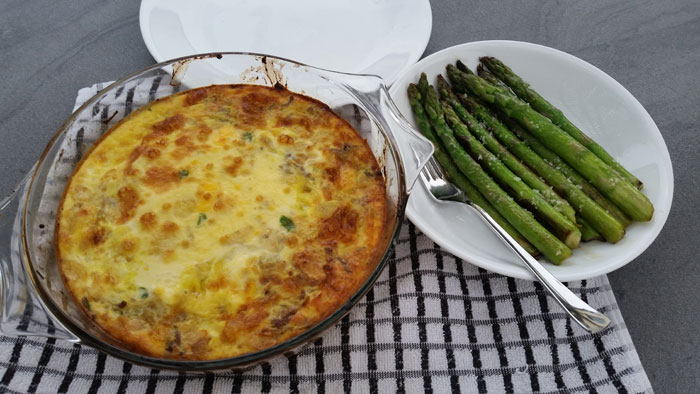
Serve it with some salad or roast vegetables, but we like serving it with some grilled asparagus sprinkled with sea salt.